My blog has moved!

You should be automatically redirected in 6 seconds. If not, visit
http://ahungrybear.com
and update your bookmarks.

Showing posts with label meat. Show all posts

Thursday, January 29, 2009

gorgonzola and walnut stuffed flank steak

gorgonola walnut stuffed flank steak

Flank steak is one of my favorite cuts of beef to feed a group (or one large bear). It's inexpensive, if you pick a good cut it's quite lean, and it dresses up so well. You can stuff it with many combinations (try spinach, feta & pine nuts), but this particular recipe is close to my heart. Several years ago, for valentine's day, A surprised me with this cooking-for-2 class. Despite being the youngest couple there by about 25 years (this is apparently quite popular with the empty-nester crowd), we had so much fun. On the menu was this flank steak, roasted potatoes with truffle oil, and a spinach souffle. A certainly got his money's worth with this gift; I've made this dish at least once a month every since I learned it. And I bet you will too.

Grocery list: 2-3 pound flank steak, gorgonzola cheese, walnuts, 3-4 shallots, olive oil.
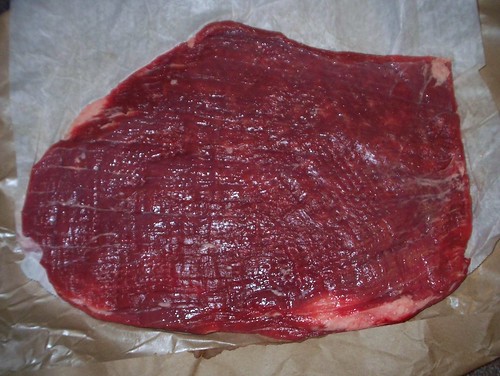
flank steak pounded thin

Before you can start, the flank steak has to be pounded thin, to less than half an inch thickness. If you ask nicely, sometimes your butcher will do it for you. Or, just lay it down on parchment paper, cover with a few layers of plastic wrap, and pound with a meat mallet. Try and get it as even as possible, and work it into a rectangle like this as best you can.
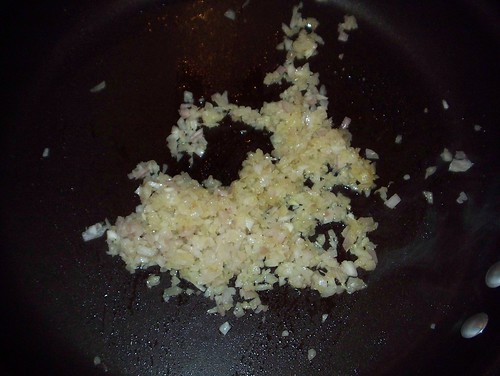
sauteed shallots for flank steak

Mince the shallots and saute in olive oil until they are translucent, about 3-4 minutes. Season with salt and pepper, remove to a plate, and allow to cool. Wipe out the pan with a towel, and toast about 1/4 cup of walnuts for a few minutes. Chop.
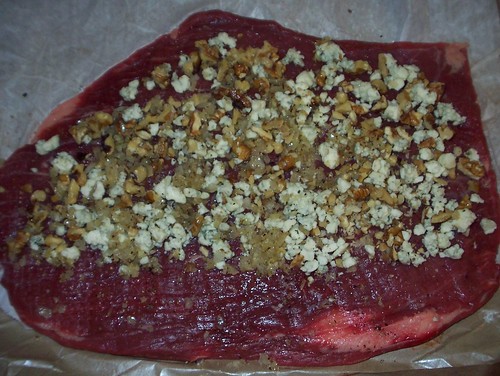
shallot walnut gorgonzola filling

When the shallots and chopped walnuts are cool, spread them across the flank steak, along with a couple of ounces of gorgonzola cheese crumbles. Leave one edge of the flank steak empty, so when you roll it up (this will be the outside edge), stuff doesn't fall out.
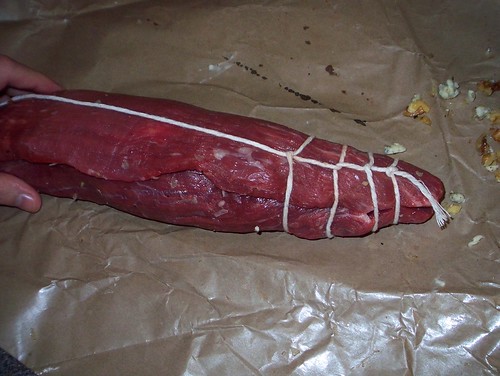
tying flank steak

Now comes the fun part. Roll up the flank steak, and tie it with kitchen twine every inch or so along the steak. The cooking class taught us a cool trick for doing this with a single long piece of twine - like adding a slip knot every inch. I still ask A to help me with this every time, since he's so much better at it than me. If I have to do it, I just cut little individual pieces and tie them separately - elementary but effective.
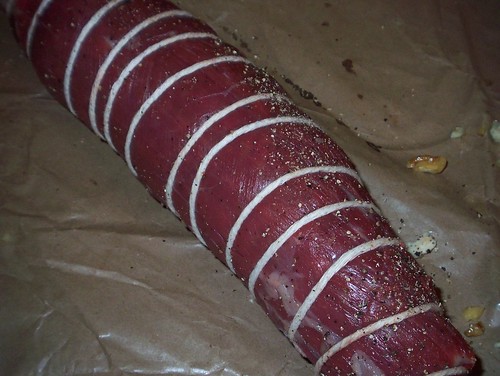
tied flank steak

When it's all tied up, season the outside with salt and pepper. Preheat the oven to 375 degrees.
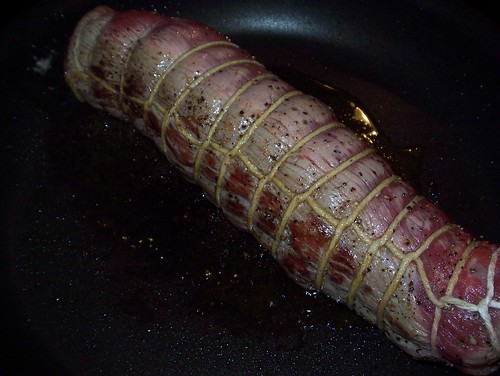
searing flank steak

Heat a swirl or 2 of olive oil in a large oven proof skillet. Sear the flank steak for 4-5 minutes - keep rotating it every minute or so, so all sides are browned. Transfer to the oven and roast for another 20 minutes.

flank steak ready to slice

When it's done, allow it to rest for 10 minutes on a cutting board. You can go ahead and cut off the twine while it's resting. Then, slice along the marks left by the twine.
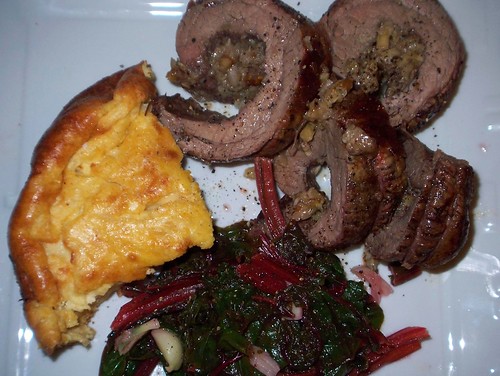
flank steak gruyere souffle and chard

I served this with swiss chard with garlic and an easy gruyere souffle.

Tuesday, January 27, 2009

sneaky sloppy joes

sloppy joes

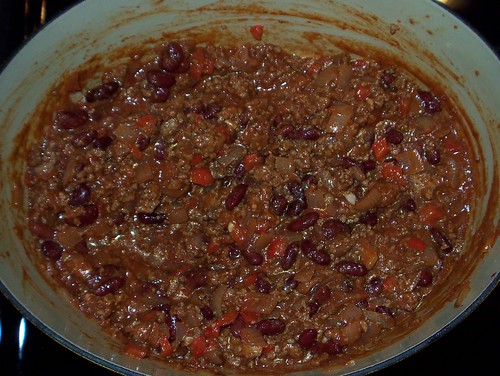
These sloppy joes will trick you into eating healthy. I saw the idea on food network some time ago, where you replace some of the red meat in your normal sloppy joe base with equally filling, high protein and fiber-packed beans. Technically, ground beef with beans probably makes it chili though...? Either way, these turned out great. Even A, an avid bean-hater, said the beans just sneaked into the sandwich without him even noticing.

Grocery list: one pound ground sirloin, one can kidney or pinto beans (drained and rinsed well), 1 can tomato sauce, tomato paste, red wine vinegar, worcestershire sauce, tabasco, yellow mustard, 1 red bell pepper, 1 onion, 3-4 cloves garlic, 1/2 cup brown sugar, olive oil.

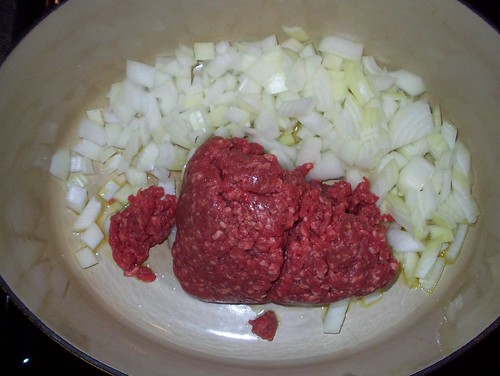
beef and onion for slppy joe base

Chop the onion. Preheat a couple tablespoons of olive oil over medium-high heat, then add the onion and the beef. Stir to break the meat apart.


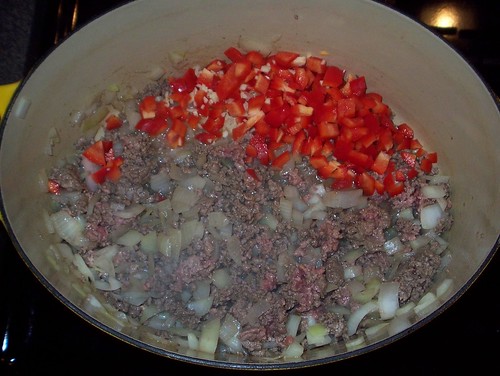
adding pepper and garlic to beef base

Chop the pepper and mince the garlic while the beef cooks. After about 5 minutes, the onions will start to turn translucent and the beef will be about half cooked. Add the pepper and garlic.

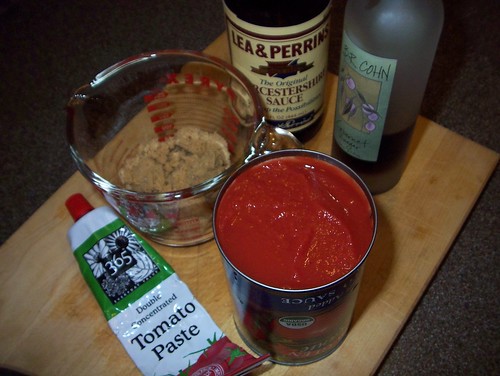
seasoning for sloppy joe filling

While the peppers start to soften, add a generous splash of both worcestershire and red wine vinegar (1-2 tablespoons each). Measure out half a cup of brown sugar and open up the tomato sauce.
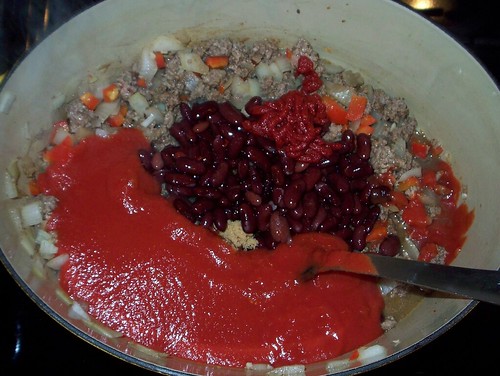
beans sugar tomato sauce paste for joes

After the peppers have cooked about 5 minutes, the beef should be cooked all the way. Now you can add the can of tomato sauce (that's about 2 cups), plus 2 T tomato paste. I also added a generous squirt of french's yellow mustard, since that's how my mom always made it, plus a shake of tabasco to taste. Stir in the brown sugar, then season with salt and pepper. Turn the heat down to a low simmer and cook for about 10 minutes.
finished sloppy joes

If you have the time, you can turn off the finished dish and let it sit there for a while (an hour, whatever) and the flavors keep melding together - just reheat when it's time to serve. Split fresh hamburger rolls, toast them under a broiler, and pile the filling in. Serve with lots of Frank's Red Hot or tabasco. (Do you see these buns? I made them! I'm working on fresh bread now - more on that when I'm confident enough to share...)

Sunday, January 18, 2009

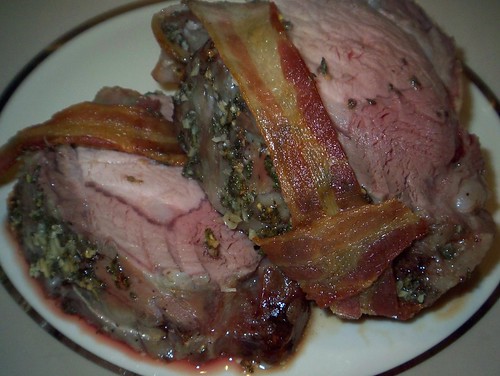
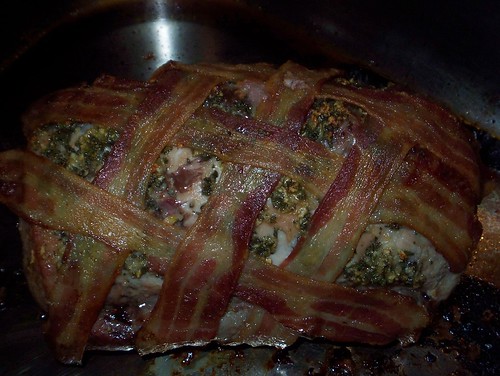
bacon wrapped maple pork loin

bacon wrapped maple pork loin

First, an apology/excuse... I've been (and still am) traveling to Colombo, Sri Lanka, for a work trip. As with all other work trips, I cooked up a storm before leaving (both so A would not starve in my absence, and also so I'd have some photos and recipes to blog about when I'm up at 4am with jet lag and nothing to occupy my time but the indiscernible plotlines of Bollywood movies). But this trip, I've just been so busy, and more homesick than usual, so I've been avoiding the pictures of familiar comforting foods. Without further procrastination, here is an amazing recipe I found on Epicurious for a roasted pork loin. It is certainly not meant to be cooked, portioned and then frozen, but I'm happy to report that this is what I had to do out of necessity, and A has informed me it worked perfectly well. Note that you'll need between 8 and 24 hours to brine the pork before roasting it.

Grocery list: (for the brine) 1/3 cup kosher salt, 2 T maple syrup, black peppercorns, 2 sprigs fresh sage, garlic, 1 bay leaf, 3-4 pound boneless pork loin roast; (for the roast) 3 garlic cloves, 2 T finely chopped fresh sage, 3 T maple syrup, bacon slices, 1 T cider vinegar.

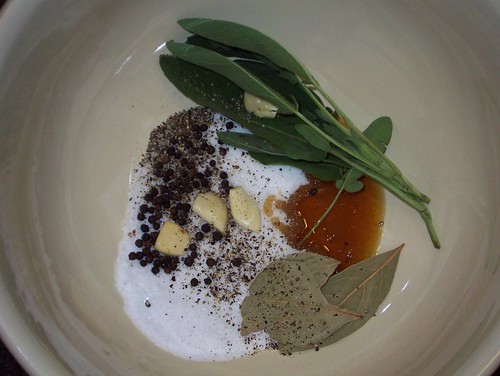
brine for maple pork

To make the brine, combine the salt with 8 cups of water, a smashed garlic clove, a couple sprigs fresh sage, a bay leaf, 1 T of syrup, and a large pinch of black peppercorns. The original says to heat this all in a saucepan over the stove, but to save some of the dishwashing, I placed this in the bowl I normally use to brine things (meaning, a big one), and heated it in the microwave for 3 minutes. Allow to cool to room temperature, then chill in the fridge for an hour.

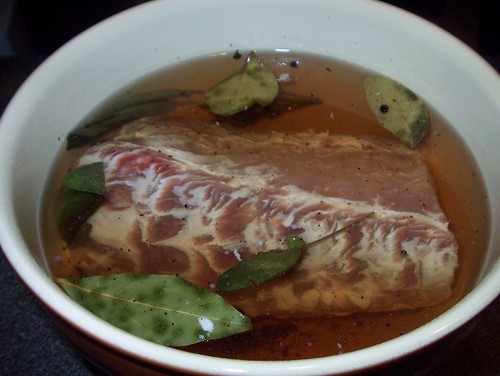
pork loin in brine

Submerge the pork loin in the bowl, and chill for at least 8 hours and up to 24.

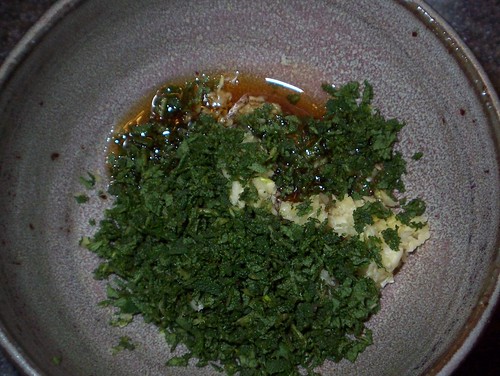
maple sage garlic paste for pork roast

When it's time to roast the pork, remove it from the brine and pat it dry. Make a paste of 3 minced garlic cloves, the sage, and 1 T of the syrup.

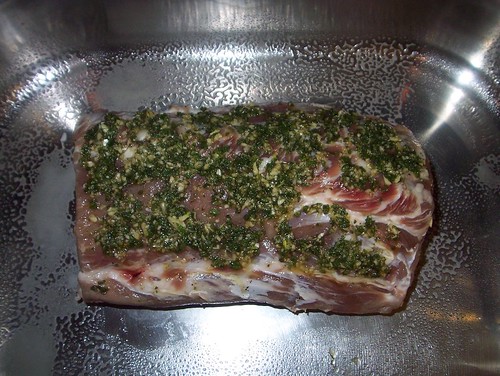
pork loin with sage maple paste

Rub this over the top and sides of the pork.

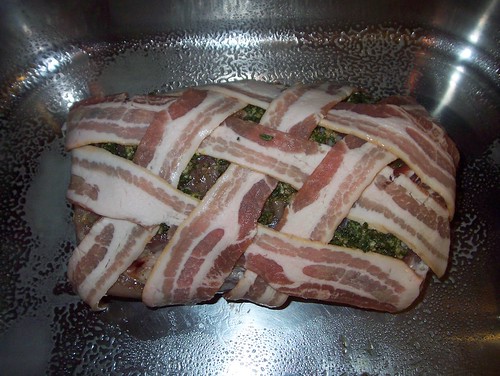
bacon wrapped around pork loin

Lay strips of bacon across the pork to cover the top - the original calls for 16 slices but I only needed to use 6. Tuck the ends of the bacon underneath the pork. Roast at 350 degrees on the center rack of the oven until the pork is 140 degrees (this took a little over an hour).

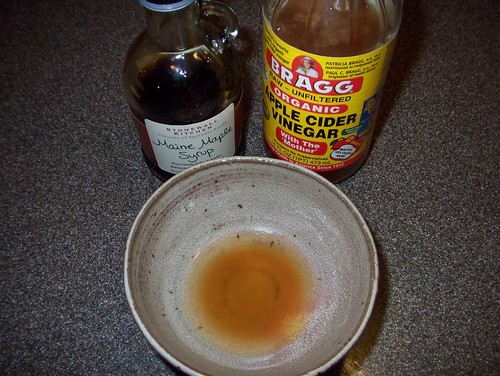
maple cider vinegar glaze

Make the glaze by mixing the remaining syrup with the cider vinegar, then brush this over the pork. Return to the oven and continue to roast until the internal temperature of the pork is 150 degrees (this was about 15 more minutes for me).

bacon wrapped pork loin 2

When the roast is done, remove from the oven but leave it resting in the pan for about 15 minutes. This will allow the pork to reabsorb some of its juices. The original recipe provides instruction for cooking up a simple au jus from the pan juices mixed with more syrup and cornstarch, but I decided to skip this. If you end up trying it, let me know how it turns out. Slice the roast on the diagonal to serve.

Saturday, December 27, 2008

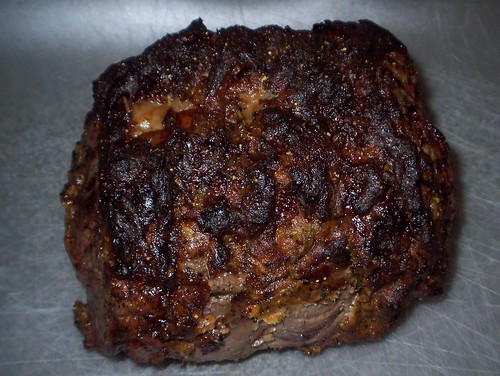
horseradish crusted roast beef

horseradish roast beef

This isn't what I had for Christmas dinner this year, but if I wasn't busy having the world's most perfect Christmas dinner (an updated version of the classic Italian 7 Fishes dinner - instead of smelts and octopus and other dried salted versions of fish, try broiled lobster tails, crab cakes, crab legs, fried prawns... more on this later), I would have made this. Well, I did make this, but a few days before Christmas. It would make a beautiful special occasion centerpiece kind of meal. I looked at many versions online, but finally settled on this one from Food & Wine, for the horseradish crust. I made a side of extra horseradish sauce as well (just sour cream and horseradish), and it was perfect.

Grocery list: (note the original recipe is for a 6 pound roast; I only made a 3 pound roast so all the ingredients listed here are half of their original amounts) 1/4 cup horseradish, 1 T kosher salt, 1 T dijon mustard, 1 T chopped parsley, 1/2 T pepper, 1/2 T sugar, 1/2 T sherry vinegar (I used red wine vinegar), 3 pound sirloin roast, tied.

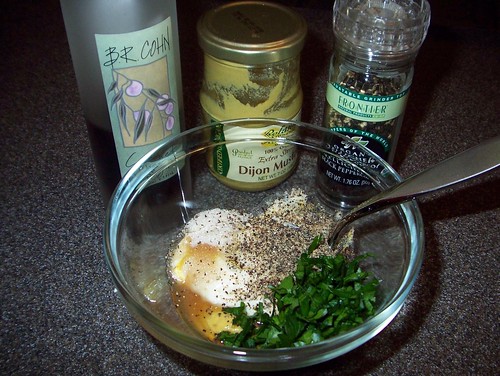
horseradish sauce for roast

Make the paste by combining all the ingredients together (horseradish, salt, pepper, sugar, parsley, vinegar).

covering roast with horseradish sauce

Set a rack over the roasting pan so your roast can cook on all sides. Cover the roast with the sauce, including the sides and bottom.

horseradish crusted roast beef

Roast for 2 hours at 375 degrees, in the lower half of the oven. The meat should register 125 degrees on a meat thermometer. Let it rest for at least 20 minutes before slicing, across the grain. Serve with extra horseradish (mixed with enough sour cream to tone it down to your liking) on the side.

Monday, December 1, 2008

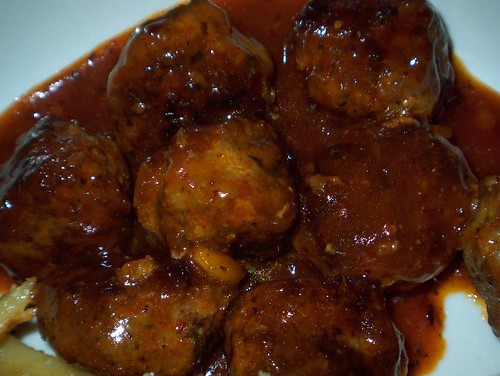
football sunday marmalade meatballs

marmalade meatballs

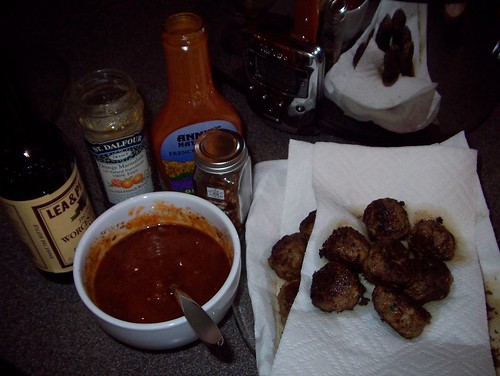
We're officially in my favorite sports time of the year - NFL is in full swing, and college basketball is just getting going. I start planning my meals around the games, since making sure you've got some great snacks is just as important to me as making sure you've got your jersey on (for the record, I alternate between Julius Peppers' Panthers jersey, Heath Miller's Steeler's jersey, and a UNC hoodie). Anyway, I remember having a neighbor's family recipe for meatballs years ago at a Super Bowl party, and he told me the secret ingredient was grape jelly. I still haven't tracked down that original recipe, but I found one I could use as a starter. I make my own meatballs (half beef, half pork, minced onion, garlic, parsley, fresh bread crumbs, a couple eggs, and a tiny bit of milk, then sauteed in olive oil), and then added them to the slow cooker with this sauce for a couple hours. They were great on their own, and the slow cooker meant you could graze all Sunday afternoon.

Grocery list: 2 pounds of meatballs, a 16-oz bottle of french dressing (original says Catalina, but WF doesn't carry much by way of super processed dressings), orange marmalade, worcestershire sauce, red pepper flakes.

ingredients for marmalade meatballs

Add meatballs (either your own or prepared frozen ones) to a slow cooker with 1 16-oz bottle of dressing, 1 cup marmalade, 3 T worcestershire, and red pepper flakes (as hot as you like). If the meatballs are already cooked and warm or room temp, cook on high for 30 minutes to an hour; if you're using frozen ones, the recipe says to cook them on high for 2-3 hours. Turn the slow cooker to the warm setting for as long as the games are on.

Friday, October 24, 2008

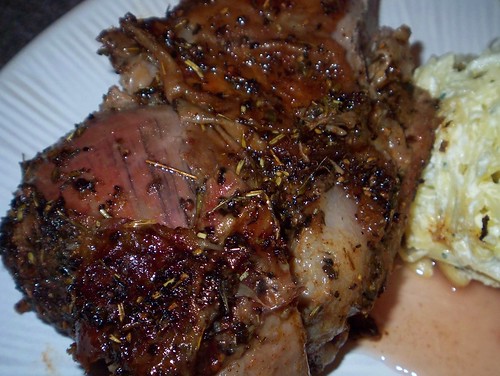
herb-crusted roast leg of lamb

herb roasted lamb leg

Lamb is one of those less expensive cuts of meat I'm trying to use more often, and especially since you can throw a roast in the oven and dinner is ready a couple hours later. This one was so easy, and I suppose it's a technique you could use for almost any roast cut.

Grocery list: 2-4+ pound leg of lamb (or other roast cut), 1 lemon, 1 large gallon-size ziploc bag, olive oil, and herbs (mix of dried or fresh - rosemary, thyme, oregano, mint - really, whatever you have, just a lot of it).

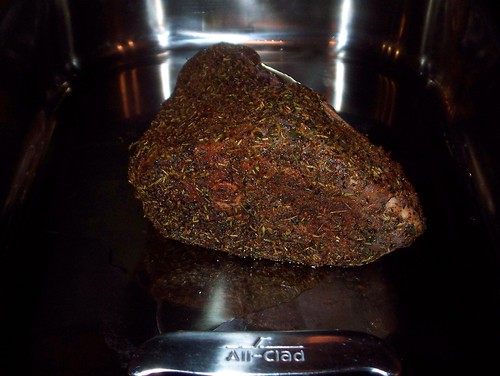
herb crust for lamb leg

Trim any excess fat or silver-skin from the lamb leg, then drop it in the ziploc bag. Add a good drizzling of olive oil, then throw in excess amounts of herbs - you're trying to cover the entire surface of the roast. Salt and pepper it generously, then cut your lemon in half, squeeze the juice into the bag (you can throw the lemon halves in the bag for good measure). Let it marinate for at least a couple hours, or set it up at night for roasting the next day. It can sit in the bag for 1-2 days.

Roast at 350 degrees for 1.5-2 hours, or until the internal temperature measures 150 degrees for medium. Remove from the oven and tent with foil; the temperature will continue to rise to about 160 (now it'll be medium to medium well). Adjust if you prefer more or less done - just remember that the roast continues to "cook up" another 10 degrees when you remove it from the oven! Carve and serve - I made this with the spaghetti squash & ricotta dish.

Friday, October 17, 2008

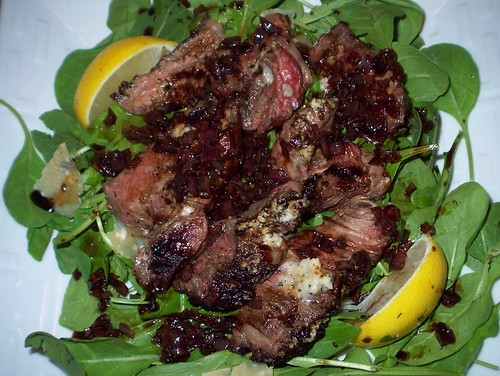
steak with parmesan butter, balsamic glaze & arugula

steak arugula salad with parmesan butter and balsamic glaze

A lot of food blogs have had posts lately about "the last cookout of the year," but we're fortunate in Atlanta that grilling is not limited to any season. If I've had a bad day and need to feel better, or if I've had a great day and want to celebrate it, a steak is my go-to meal. This recipe from October's Bon Appetit is perfect for any occasion. They describe the steak salad as "simple and sophisticated" - and I can't say it any better.

Grocery list (for 2 entree salad): 1 or 2 rib-eye steaks, 1 package arugula, grated parmesan + parmesan shavings, 1.5 T butter, olive oil, 1/4 c balsamic vinegar, 1/4 c chopped shallots, pinch dark brown sugar, 1 lemon.

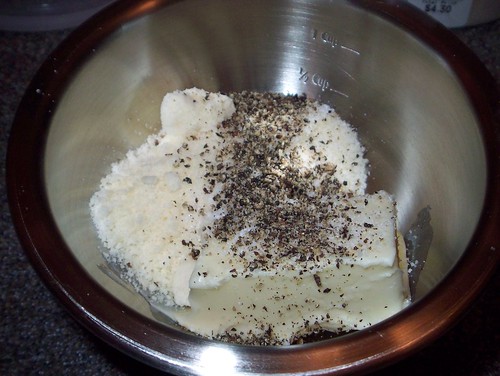
parmesan butter

Soften the butter to room temperature, then mix in 2 T grated parmesan, and salt & pepper to taste.

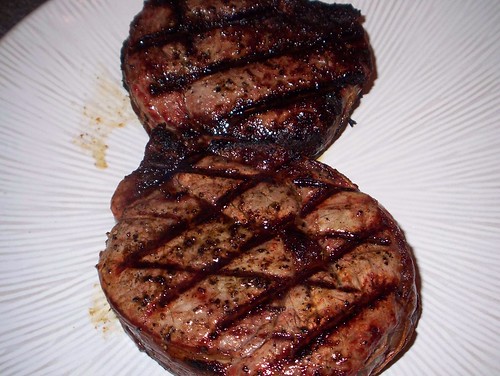
grilled ribeyes

Season steak with salt and pepper, then grill over medium high heat. (Note, the recipe calls for sauteing steak, and then finishing off the glaze in the same pan - I opted for the outdoor grill.) Cook to medium rare, transfer to plate, and allow to rest under foil.

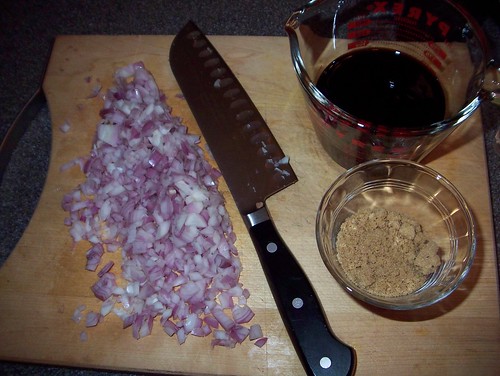
ingredients for balsamic glaze

Heat a tablespoon of olive oil in a small saucepan (or the same pan you cooked the steaks in, if you go that route), then add vinegar, shallots and sugar.

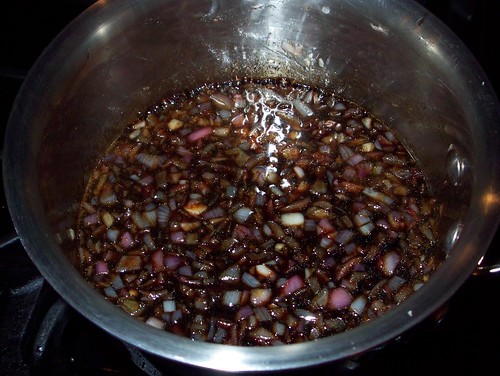
balsamic glaze

Boil until reduced to glaze - I found it took about 5 minutes. Divide arugula and parmesan shavings between 2 plates, squeeze lemon juice over the top.

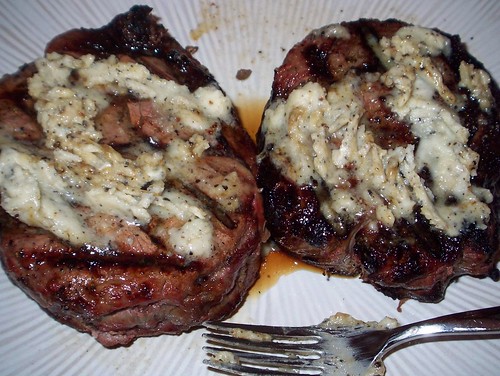
steak with parmesan butter

Slice the steak and top with the butter, then serve the steak over the arugula. Drizzle the glaze over top.

Wednesday, October 1, 2008

apple cider-braised pork shoulder

cider pork shoulder chard sweet potato fries

Like most people, the recession is having an impact on the food I eat. But instead of giving up on the "slow movement" entirely, I'm really trying to learn to cook cheaper cuts of meat in creative ways. Some of these experiments have been failures - I don't have the heart to post the cranberry mushroom brisket that seemed so promising but was tough and boring - but this pork shoulder was a decisive win. I think most of the time people use shoulder for pork barbeque, but I didn't have the time to babysit the grill for 4 hours. This recipe (from Epicurious) was great, since you only have about 10 minutes of prep time, then the roast cooks slowly in the oven. The meat was really tender, and until I make the mistake of looking up nutrition facts for pork shoulder, this is going in the rotation.

Grocery list: 3-4 pound pork shoulder, 2 garlic cloves, 3/4 cup apple cider, 5 large onions, olive oil.

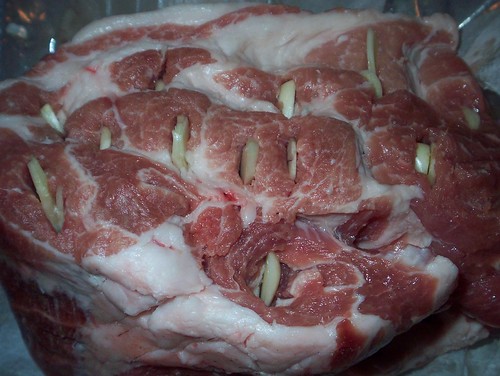
slits for garlic in pork shoulder

Thinly slice the garlic, then cut slits into the pork shoulder. Insert the pieces of garlic in the slits. Season all over with salt and pepper.

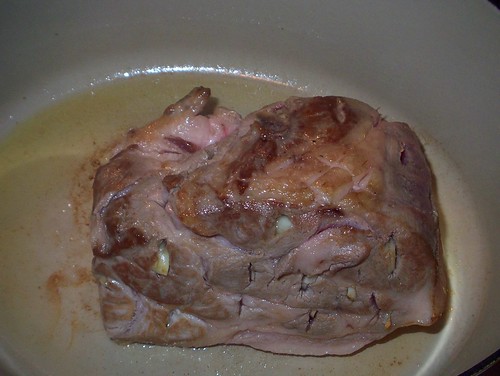
browning pork shoulder

Heat 1 T olive oil in a large dutch oven, then brown the pork for about 1 minute per side. Remove the pork shoulder to a plate.

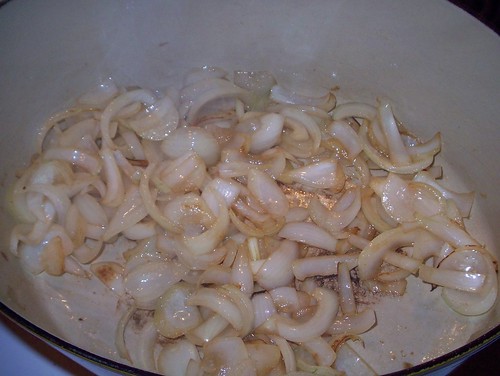
browning onions for pork shoulder

Heat another T olive oil in the pan, then saute the onions (sliced lengthwise) for 10 minutes, or until they start to caramelize. Stir in the apple cider.

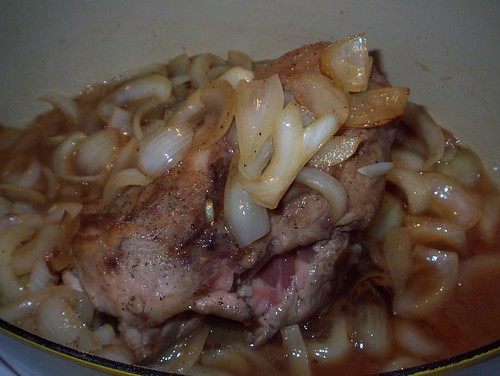
roasting pork shoulder

Place the pork back in the pan, cover tightly with foil (or the dutch oven lid, if you have the oven-safe handle), and roast for 325 degrees. The recipe calls for 2.5-3 hours, but use a meat thermometer to be safe.

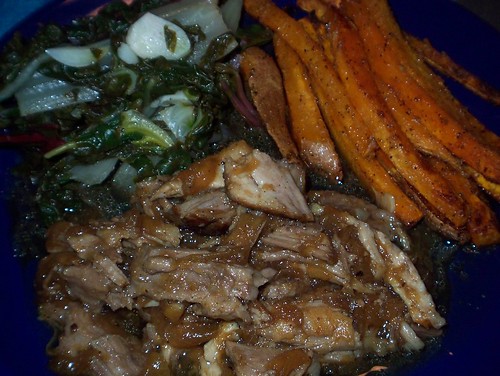
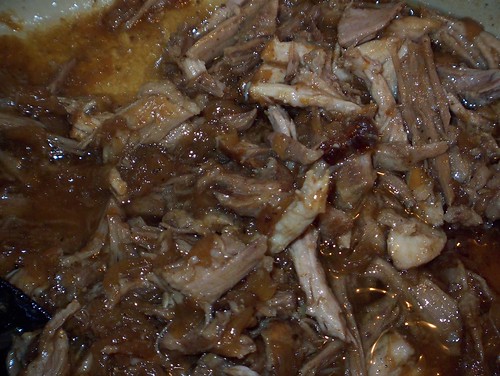
apple cider roast pork shoulder

Remove the roast, and if the onion mixture is still more liquid-y than syrup-y, heat over medium-high flame until reduced. Shred the pork and serve with the sauce. I also made sweet potato fries and garlic chard - they tasted great but the pork's sauce can make the fries soggy. Fair warning...

Wednesday, September 3, 2008

lamb cacciatore

lamb cacciatore from spqr

Ah, one of my favorite restaurants in San Francisco is SPQR. I originally read about it in Food & Wine magazine, and took my little brother there for his birthday. We were fortunate enough to get seats at the "chef's counter" - basically a bar setup over the kitchen, where you can watch the meals being prepared. The best part was hearing the lead chef talk to the line cooks. He would taste some of the dishes under way and tell the line cooks what was missing. My favorite overheard quote was "more salt, more salt! If it's not over-salted it's under-seasoned!" So I was justifiably excited - practically giddy - when I saw the September 2008 Bon Appetit, the "Restaurant Issue": recipes from SPQR! I did not have this lamb cacciatore at the restaurant, but I will try it when I'm back in the bay area to see how it compared to my own version.

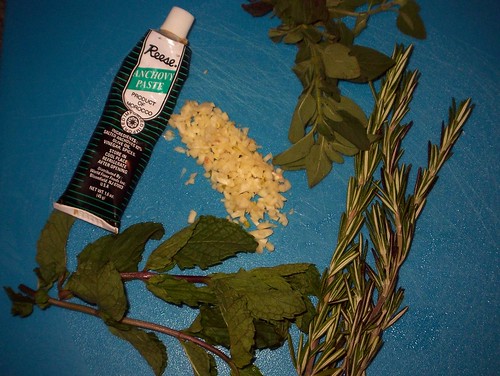
Grocery list: 3 pounds boneless leg of lamb, trimmed and cut into 1 inch chunks [note, ask your butcher, but I substituted shoulder and it was only $5 a pound - you have to trim it anyway, so it was perfect in my opinion]; 1/4 cup white wine, 2 garlic cloves, olive oil, 2T chopped fresh rosemary, 1 T chopped fresh oregano, 1 T chopped fresh mint, 4 anchovy fillets chopped (or 1-2 T anchovy paste), 1 bag fresh arugula, lemon wedges.


mint rosemary oregano garlic anchovy for lamb

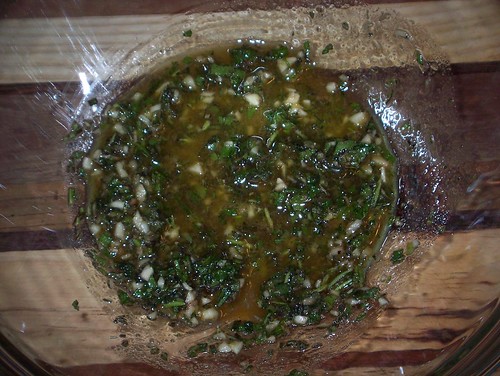
Drizzle wine over lamb pieces and season with salt and pepper. In a small bowl, make the marinade by mashing garlic with 4T olive oil, then mixing in all the herbs and anchovies.

herb anchovy marinade for lamb cacciatore

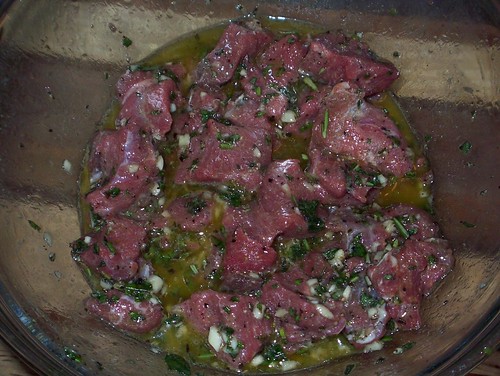
Stir into lamb, cover with saran wrap, and chill for at least 2 hours.

marinating lamb for cacciatore

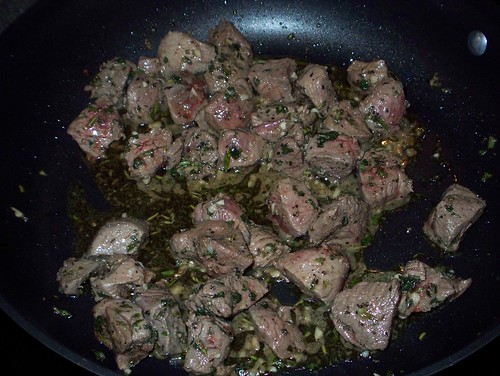
The recipe says you can cook the lamb either over a grill (using metal skewers to make kabobs), or by sauteing - I used the latter method.

sauteing lamb for cacciatore

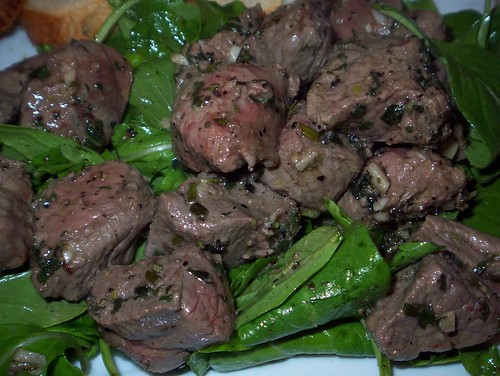
Heat 1 T oil in large pan, then saute lamb in batches over high heat, about 5-6 minutes for medium-rare. Toss the arugula with a drizzle of olive oil and salt and pepper. Serve the lamb over the arugula with lemon wedges on the side.

Wednesday, June 18, 2008

is it summer in atlanta or winter in northern italy?

braised roast and artichoke risotto

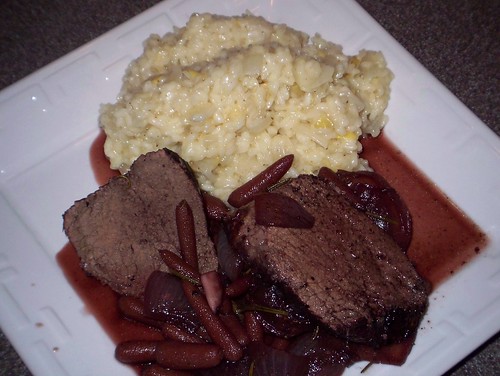
This is what I made for dinner last night: roast beef braised in red wine and artichoke risotto. Makes perfect sense for a 93 degree day in Atlanta...?? Let me explain. Last week I was in Sri Lanka (yes, I sandbag my blog posts sometimes), and although the food was delicious, I missed red meat, my beloved Italian food, and most of all, COOKING. So I figured I would make a few favorites for dinner last night, not caring if I heated up the oven (and the rest of the loft) for 3 hours roasting meat, or having to stand over a boiling pot stirring chicken broth constantly for 45 minutes. And I'm so glad I did.

Grocery list: (for the roast) 2-4 pounds roast (I used a 2 pound local eye of round roast), 1-2 vidalia onions, handful peeled garlic cloves, some carrots, rosemary, sage or bay leaves, beef stock, 1 bottle red wine; (for the risotto) 2 cups arborio rice, 1 quart chicken stock, 1/2 to 1 jar marinated artichokes, parmesan cheese, butter, olive oil, white wine (1/2 - 1 cup), 2 cloves garlic, 1 small white onion finely chopped, 1 lemon.

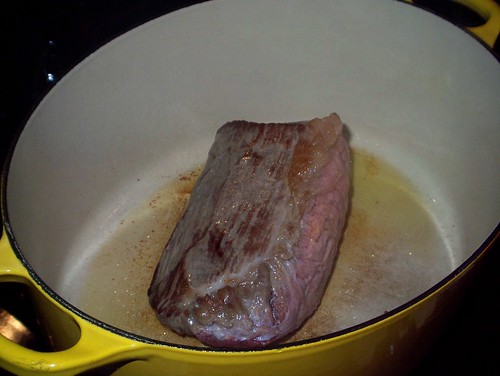
searing roast beef

This whole dinner started with an incident at the meat counter at WF. I was standing there waiting for another cut of meat I ordered, when I noticed this pile of different types of roasts from a local butcher. One of them, an eye of round roast, seemed to be looking at me directly, saying "cook me, cook me!". True story. So I asked the butcher to tie him up, although I've never cooked this cut of meat before. After a little googling, I found this great recipe from Lidia's Italy on Epicurious. I actually had a bottle of Barolo in my wine cellar (AKA bathroom closet), but it was too expensive to cook with so I went with a Shiraz. Making this Italian-Australian roast beef. Anyway, start by seasoning the meat on all sides with salt and pepper, then sear it in a dutch oven over med-high heat in olive oil.

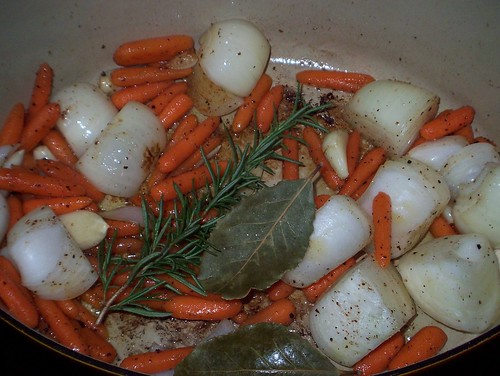
vegetables for roast beef

Once the meat has been seared on all sides (about 1 minute per side), remove it from the pan, add a little more olive oil, then cook the vegetables. I used 2 small vidalia onions, quartered, and half a bag of baby carrots, plus 6-8 whole garlic cloves. The original recipe calls for celery too, but I skipped it. After a few minutes, add a whole sprig of rosemary and a couple of sage or bay leaves. Make a little space for the roast and return it to the pan.

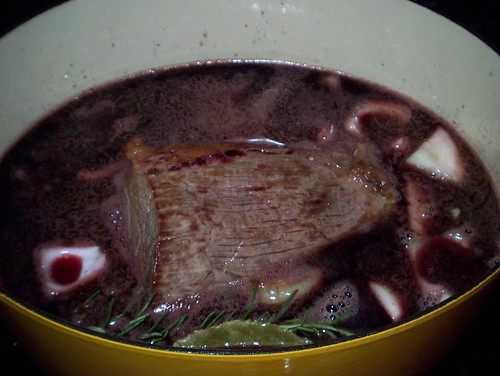
braising beef in wine

Pour in a bottle of wine, and then add beef stock (1-2 cups), enough to go up the sides of the roast about halfway. Heat on the stove until the liquid is steaming but not boiling, then move to an oven and roast at 250 degrees. Every 30 minutes, flip the roast over. For a 2 pound roast, you could cook this for 2-2 1/2 hours; for a larger 4-6 pound roast, the recipe says you can cook for 4 - 4 1/2 hours. A meat thermometer would really help here (I don't have one and ended up overcooking the meat a bit).

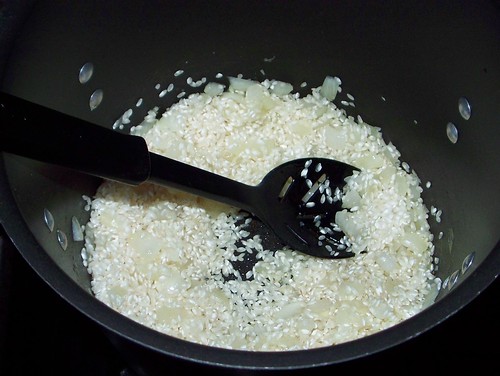
frying rice for risotto

During the last 30 minute rotation for the roasting meat, I made the risotto. I make these fairly often actually and have never followed a recipe. Last night I wanted something with a salty kick to go with the meat - something with olives or lemons maybe. When I saw the recipe for lemon and artichoke risotto from Jamie Oliver's cookbook, I knew it would be perfect. As with all risottos, you start by sauteing the onion and garlic in olive oil until softened.

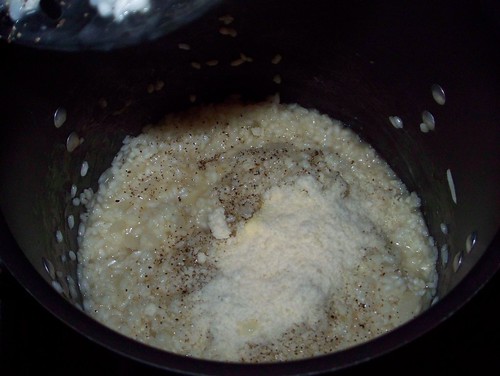
risotto with parmesan

Next, add 2 cups arborio rice and stir to coat the rice with the olive oil. Turn the heat up to med-high and keep stirring. The rice will start to fry and turn slightly translucent - that's when you add about a glass of white wine (1/2 - 1 cup). While this is absorbing, heat the chicken stock so it's hot but not boiling. Add a ladle of the stock at a time to the rice, stirring frequently. Allow the stock to absorb before adding the next ladleful. When you've added it all, the rice should be a smooth creamy texture (takes 15-20 minutes). Turn off the heat and add 2-4 T butter and about 1/2 cup of grated parmesan. Cover and let stand for a couple of minutes. Then stir, season with salt and pepper, and add the zest and juice of 1 lemon and some chopped artichokes. Jamie's recipe calls for cooking fresh artichokes during the rice-cooking phase, but I didn't miss cooking *that* much - I went with a nice jar of marinated artichokes from the farmers market.

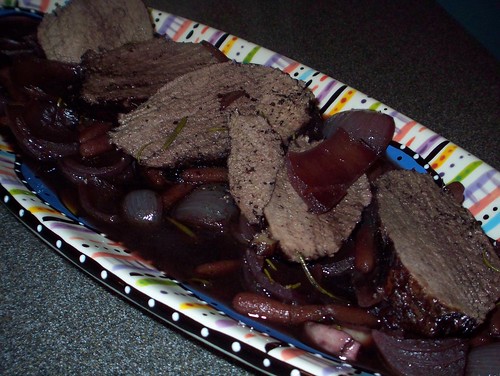
wine braised beef

When the roast is as done as you like it, remove it from the oven and set to rest on a cutting board. Scoop out the vegetables and place on a long serving dish. Move the pan on the stove and heat the braising liquid till boiling - keep cooking it till it is reduced to a syrupy consistency. Slice the roast beef on the diagonal and lay on top of the vegetables; spoon the sauce over top.